A good spray job looks simple: a boom glides across the field, spray sweeps down, a pest is controlled, and turfgrass is healthy.
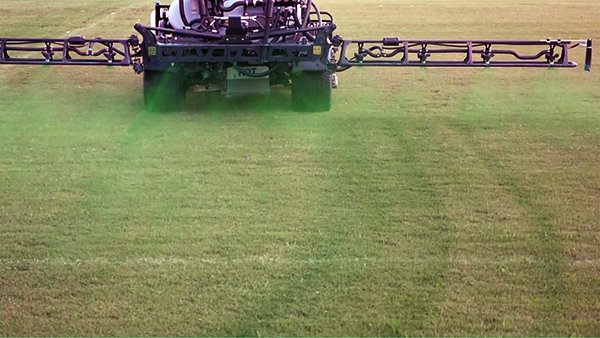
But if one simple thing goes wrong, results can be awful. Bad herbicide spraying can cause turf injury, pesticide drift, failed control, wasted product, damaged equipment.
Most spray boom failures are no mystery. They can be traced to decisions, weather information, and actions before the spraying began:
- the wrong nozzle
- too much wind drift
- poor calibration
- incorrect boom height
- bad overlap
- spillage
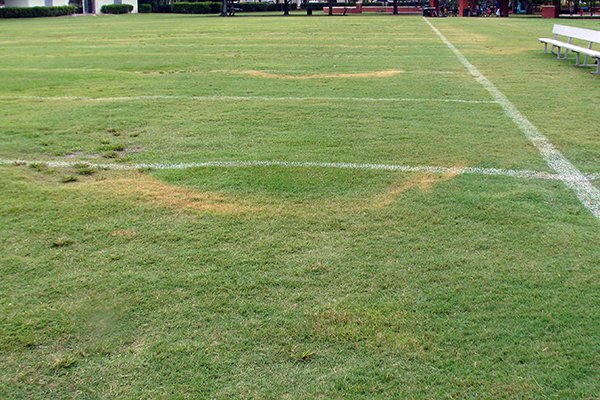
The outcome of a spray operation is often largely determined by setup and prep. Small prep mistakes can emblazon billboard-sized signatures onto the field—stripes from poor overlap, crescents at turnarounds, and spray drift extending beyond the intended target or concentrated in bands. Weird stuff that elicits the wrong kind of conversations. Or worse.
Get ready to spray – with a checklist
One of the most useful parts of my article (below) is the 23-point checklist that I based on real-life problems that I actually saw in turfgrass spray jobs.
Examples that I have seen include drift damage from spraying in excessive wind, double applications from poorly judged overlap, crescent-shaped injury from failing to shut off the boom during turns, and serious damage or failure to control from selecting the wrong herbicide. On a sod farm, guessing at the name of an herbicide based on the first couple letters of the name had lethal consequences. Other failures came from clogged hoses, mismatched nozzle tips, poor agitation, unreadable tank levels, and incompatible tank mixtures.
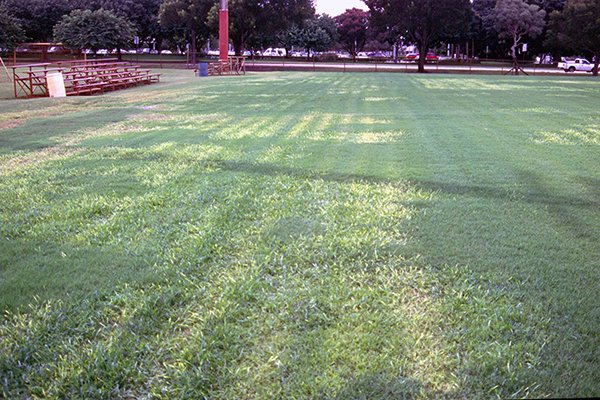
Herbicide mistakes can be obvious
On spray day, a short window of good weather can close quickly, leaving no time to fix a leak, change a nozzle, correct a calculation, or get something you forgot. So, a handy checklist can reduce last minute surprises. And if the weather changes, knowing acceptable parameters ahead of time helps the applicator to decide to call it off for another day.
The article also explains the simple principles behind boom calibration. The amount of spray water applied per acre depends on just three things:
- nozzle discharge rate
- travel speed
- nozzle spacing
Without getting into the equations at this time (see Table 2 in the article), understanding the relationships of speed, volume, and area makes it much easier to recognize when a setup does not make sense, even with computerized spray equipment. Nozzle type, pressure, boom height, droplet size, and wind all matter because they affect coverage and uniformity. A spray job calculated correctly on paper can still fail if there were any unwritten assumptions.
Good spraying is more than applying a chemical. It is planning the operation so the result is predictable.
Read the full article, “Ready…Set…Spray: Principles of Spraying and Checklist,” in the January/February 2019 issue of Florida Turf Digest.