
Irrigation
Irrigation is the application of water to supply plant needs, in agriculture and landscapes. The purpose of irrigation is to replace soil water that plants use in evapotranspiration (ET), to the degree that it is not replaced by rain or other precipitation.

Whether you are managing an irrigation system for optimum plant health or conservation, it is important to understand the physics of water and its measurements.
Physics of water
Physical properties of water, such as capillarity and heat of vaporization, drive evapotranspiration and movement of water in soil and plants.
Degrees of soil wetness (saturation, field capacity, wilt point, and hygroscopic water) differ in the amounts of water in soil pores, gauged to plant roots’ ability to absorb it. The ideal degree of soil wetness, “field capacity” is when capillary micropores (those smaller than 60 microns in diameters) are filled with water and accessible to plant roots, and larger pores are filled with air. Soil physical properties important in plant water use and irrigation are particle size distribution and organic matter content, as they affect micro- and macroporosity, the percent soil volume in large pores) and saturated hydraulic conductivity. Saturated hydraulic conductivity is a standardized measure of potential percolation rate.
Available water capacity
Irrigation events are scheduled on account of three variables rain, evapotranspiration, and available water capacity (AWC). The AWC is the most difficult factor to know in irrigation scheduling.
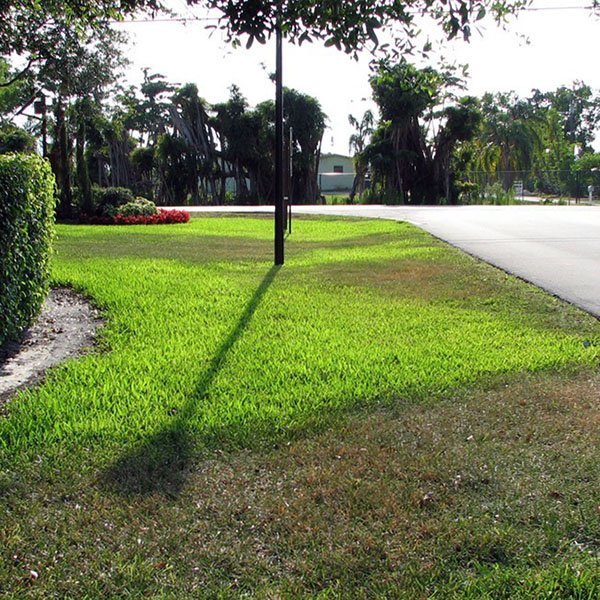
Available water capacity is soil volume in micropores, the passageways < 60 microns in diameter between soil particles within the root zone. To visualize, if plant roots go 6 inches deep and micropores are 12.5% of soil volume, AWC is 0.75 inches.
A simple daily accounting of water added, due to rain or irrigation, and water removed, due to evapotranspiration, tell if the AWC is:
- filled, no more water needed
- empty, need to irrigate
- somewhere between, wait
Rain is visible and readily measured. Irrigation we control and can accurately estimate by knowing irrigation system “precipitation” rate and duration. Evapotranspiration (ET) is not visible but can be measured or estimated.
Rain and evapotranspiration
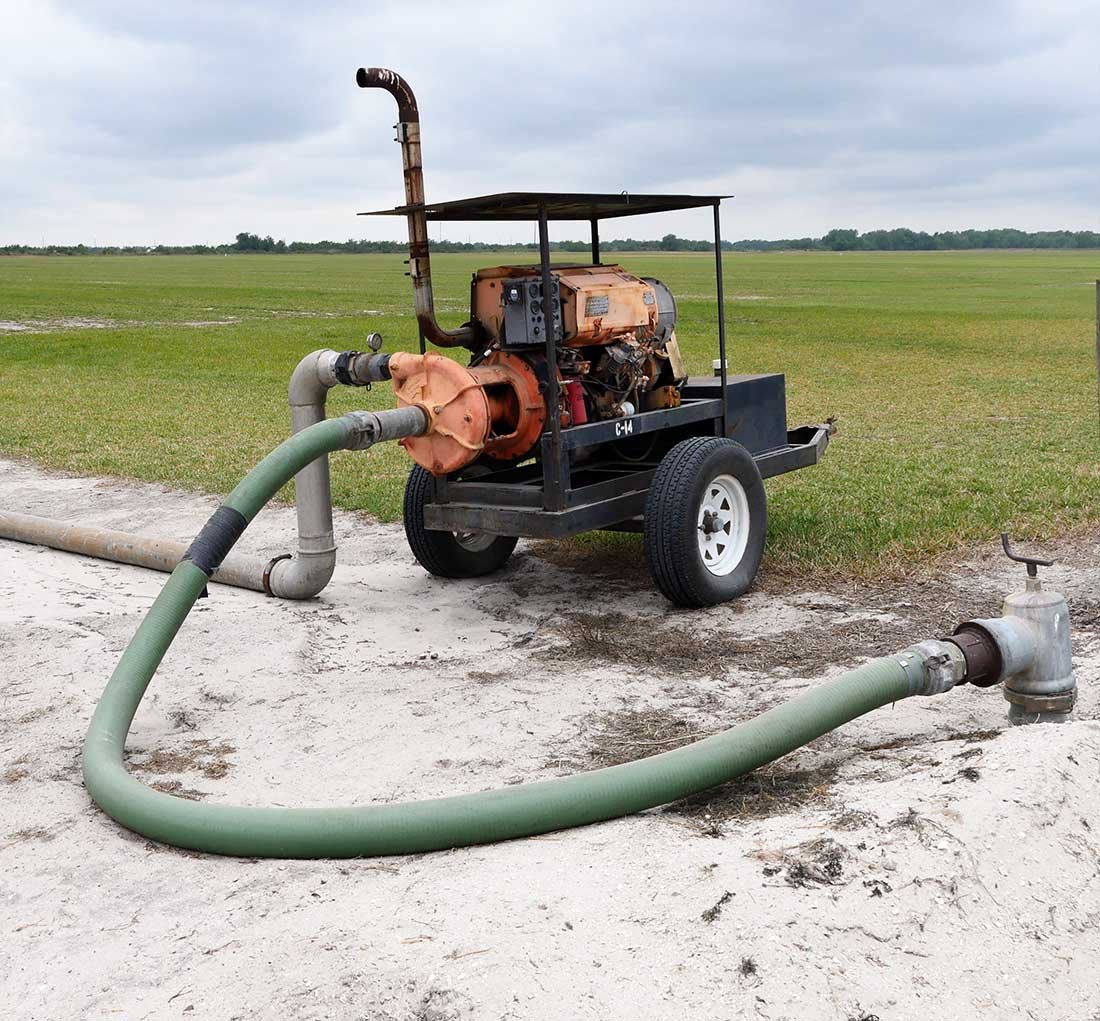
If it rains too much or we irrigate too long, more than field capacity, soil macropores fill up, and the soil is saturated, and we can’t count the extra water as part of AWC. Because plant roots in saturated soil can’t get much oxygen and won’t function efficiently to take much up.
If it rains really too much or we irrigate much too long, water must exit the plant-soil system through runoff (horizontally to other areas), or by percolation (down through the subsoil). Because we know and can account for AWC, ET, and rain on every day, our spreadsheet will show in each column how much came in, how much went out, the plant-root water status each day, and when to irrigate.
Rain, ET, and AWC can be used to accurately schedule irrigation for plant health, either by human intervention or by mechanical programming. Direct estimation of plant available water by using a soil moisture sensor can circumvent some of the complexity and uncertainty. Political authorities such as water management districts and practical constraints such as pumping capacity (see Area irrigated by a pump) also affect timing and amount of irrigation.
Design and measurement
Great hydraulic civilizations discovered the use of water measurements, to move water to crops. In the 1100s Merv was the largest city in the world, in Khwarazm in present day Turkmenistan. Merv was underlain by a “maze of underground pipes of baked clay that . . . included valves, catch basins, and access points for cleaning, as well as exceedingly complex changes of gradients . . . a staff of twelve thousand to maintain the hydraulic system” (Starr, S. Frederick. 2005. Lost enlightenment. Princeton University Press. Opens new browser tab to download 32 MB PDF document.)

Students who are nimble with numbers and geometry can excel in irrigation. Efficient irrigation management requires understanding quantities water volume, land surface area, and soil water content at different degrees of soil wetness.
Water quantity is measured as volume, and land surface as area. The amount of irrigation volume divided by area, which is a distance, depth. It is easier to visualize the converted expression “it rained 1 inch” than “it rained 27,154 gallons per acre,” though the values are equal. When time is entered into an expression of precipitation depth, this results in precipitation rate as “inches per hour” which is useful in sprinkler irrigation design and scheduling.
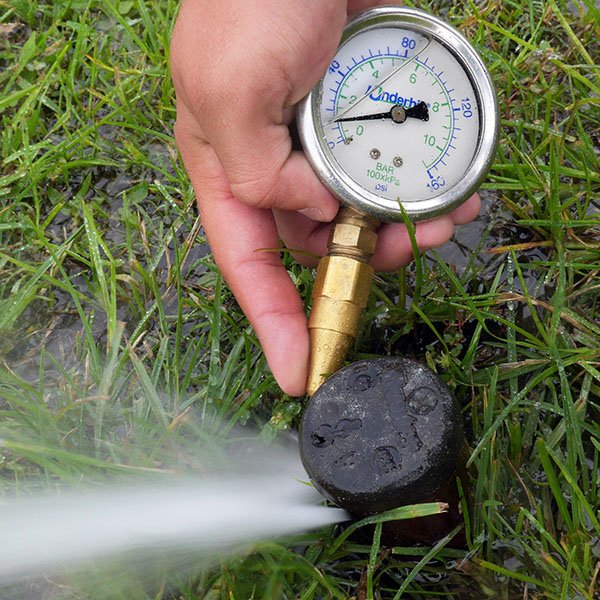
Modern irrigation systems use networks of in-ground pipes to deliver water, under pressure from a pump, to sprinkler nozzles for “overhead” (above-ground) dispersal to a crop. Efficient irrigation system design uses geometric relationships of sprinkler spacing, in the case of overhead sprinklers, and distribution radius to choose and layout the right kinds of sprinkler heads for proper head-to-head overlap. The combination of a pump and piping system introduces other measures of water in irrigation, weight (or mass) and velocity, and mathematical derivatives pressure, flow (volume per time), friction loss in pipes, and horsepower. The two most important tables for designing irrigation systems are the sprinkler table and the “friction loss” (or pressure loss) table.
Pumps, pipes, fittings
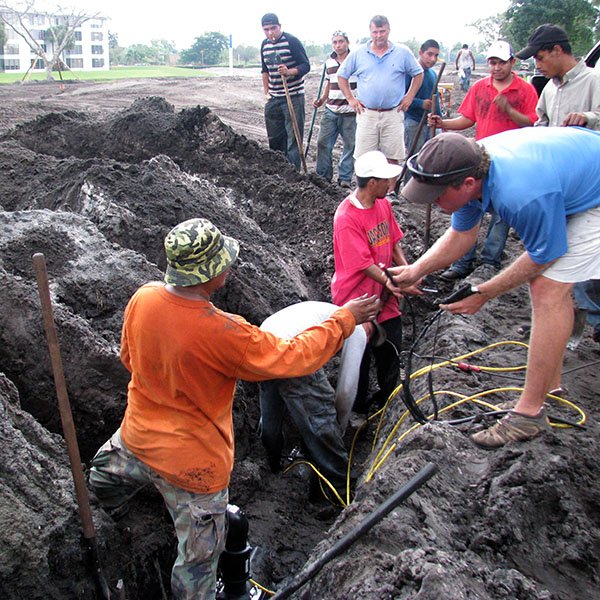
Components of irrigation systems include pipes and fittings of varied materials such as steel and PVC and PE, pumps, valves, sensors, and control systems. Components are assembled into many specialized kinds of irrigation systems such as center pivot and linear move, and subsurface. Besides overhead sprinkler irrigation, other kinds of irrigation systems include flood irrigation and microirrigation (drip irrigation). Microirrigation can be even more efficient than sprinkler irrigation in distributing water directly to plant roots instead of through the air.
Great civilizations rose and fell according to their ability to design and manage irrigation. Not surprisingly, successful hydraulic civilizations had mathematical geniuses.